

Table of Contents
In garment production, the final choice between puff and high-density ink depends on one factor: The balance between edge precision and production speed.
Here’s the bottom line for production managers: HD ink is your go-to for crisp, 90-degree edges and that premium stacked look. Alternatively, puff ink wins out when you need soft-touch volume, a lightweight feel, and faster, budget-friendly print runs.
Visual Effects and Physical Characteristics
When analyzing 3D effects, the visual “personality” of the print is the first thing buyers notice.
Puff plastisol ink uses a heat-reactive blowing agent. As it passes through the conveyor dryer, the ink expands in all directions—upward and outward. This creates a rounded, marshmallow-like finish. It is ideal for vintage styles, large varsity lettering, and designs where a “soft” look is preferred.
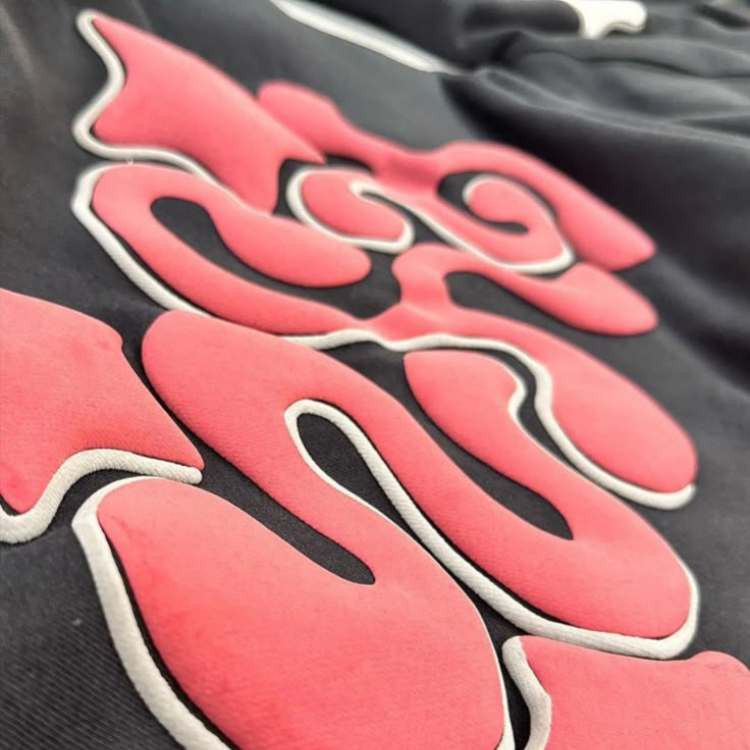
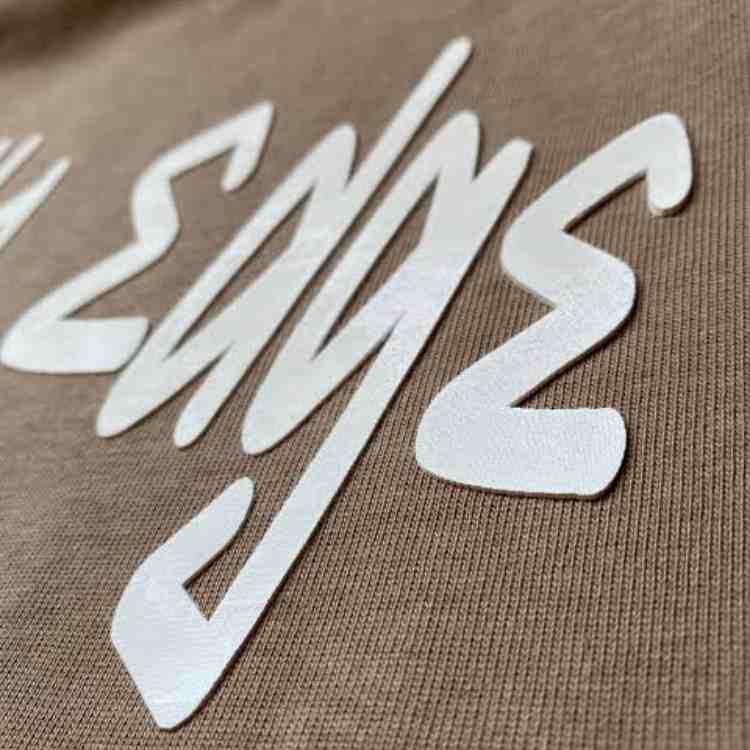
In contrast, high density ink (HD) stays exactly where it is printed. It does not expand. The height comes from the physical thickness of the ink deposit. This results in a “brick-like” appearance with sharp, clean edges. It is the gold standard for high-end streetwear and tech-wear brands that want a molded plastic or silicone-like look.
Expert Insight: According to industry standards for specialty prints, HD ink maintains detail down to 1mm lines, whereas puff ink typically loses 20-30% of fine detail due to the “blooming” effect during expansion.
Technical Requirements: Stencil and Mesh Selection
The screen room is where the success of these inks is decided. You cannot use the same screen setup for both effects.
| Feature | Puff Plastisol Ink | High Density (HD) Ink |
| Mesh Count | 86 – 110 t/in | 60 – 86 s/thread (High Open Area) |
| Emulsion Thickness | Standard (EOM 10-15%) | Capillary Film or Thick Liquid (200-400 microns) |
| Off-Contact | Standard (1/16″) | High (1/8″ or more) |
| Squeegee Pressure | Medium | High (to shear thick ink through the mesh) |
For screen printing plastisol ink applications involving puff, a standard mesh and emulsion setup usually suffice because the “growth” happens in the dryer. However, for HD, the stencil is the mold. If the emulsion isn’t thick enough, the print will be flat.
Best Practice for HD Stencils:
Use a “coat-dry-coat” method with high-solids emulsion to build a gasket. For maximum height, many factories prefer capillary films (150-300 microns). This ensures the ink has a deep “well” to sit in before the squeegee passes over.
Curing Control and Production Stability
This is the biggest pain point for technical teams. If the dryer isn’t dialed in, the product fails.
Puff Ink Dynamics:
The expansion of puff plastisol ink is highly temperature-dependent.
- Under-cured: The ink doesn’t rise, or it rises but peels off after one wash.
- Over-cured: The puff agent “collapses,” leaving a wrinkled, flat, and hard surface.
High Density Ink Dynamics:
HD ink is thick. The challenge isn’t expansion, but “through-curing.” Because the ink layer is so deep, the heat must penetrate all the way to the fabric interface. If only the top “skins over,” the print will crack or delaminate.
Best Practice for Dryer Settings:
Slow down the conveyor belt. It is better to have a longer dwell time at a steady temperature (320°F / 160°C) than a high-heat “flash” that only burns the surface. Always use a donut probe to verify that the ink at the base of the HD stack reaches full cure temperature.
Fabric Suitability and Wash Durability
Not all fabrics handle 3D inks equally.
- Cotton/Fleece: Both inks perform excellently. The heavy fibers of hoodies provide a stable base for the weight of HD ink.
- Polyester/Blends: Here, you must be careful. The high heat required for curing puff can trigger dye migration. In these cases, we recommend using an anti-migration plastisol ink as a base layer before applying the puff or HD topcoat.
- Lightweight Tees: HD ink can be too heavy. It creates “belly” in the fabric, making it hang awkwardly. Puff is much lighter because it is filled with air, making it the better choice for 4.3oz or lighter shirts.
Wash Test Comparison:
In laboratory wash cycles (ISO 105-C06), HD ink generally shows higher abrasion resistance. Puff ink is more prone to “deflating” or cracking if the user uses a high-heat tumble dryer at home. As a screen printing ink manufacturer, we advise providing specific care labels for 3D prints (Cold wash, hang dry).
Bulk Production Stability: The Manufacturer’s Perspective
At ECOPRINTINK, we monitor how these inks behave during 1,000+ unit runs.
- Puff Consistency: Puff is very stable on the press. It doesn’t dry in the screen easily and maintains a consistent viscosity. It’s a “set it and forget it” ink for large orders.
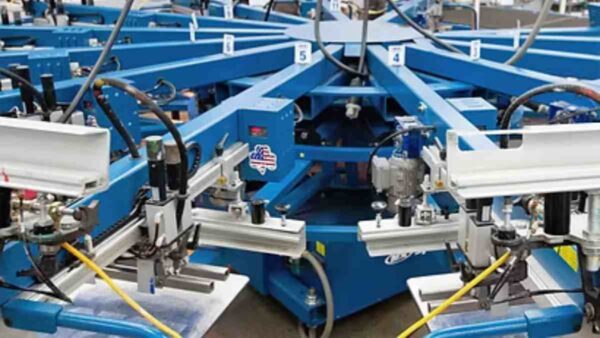
- HD Challenges: HD ink can be “sticky.” On an automatic press, the “snap-off” must be perfect. If the ink sticks to the back of the screen, the next print will have a “picked” or “stippled” texture instead of a smooth flat top.
If you are running a high-volume factory, wholesale plastisol ink costs are also a factor. Puff ink uses less raw material per cubic millimeter of “height” because of its expansion. HD ink requires a massive volume of ink to achieve the same height, often increasing ink consumption by 300-500% compared to standard prints.
Common Production Mistakes to Avoid
- Using fine mesh for HD: This leads to “clogging.” You need the wide openings of a 60-80 mesh to let the thick screen printing ink solutions pass through.
- Stacking puff too high: If you print puff too thick, it will look like a “brain” texture—uneven and bubbly. One clean pass is usually enough.
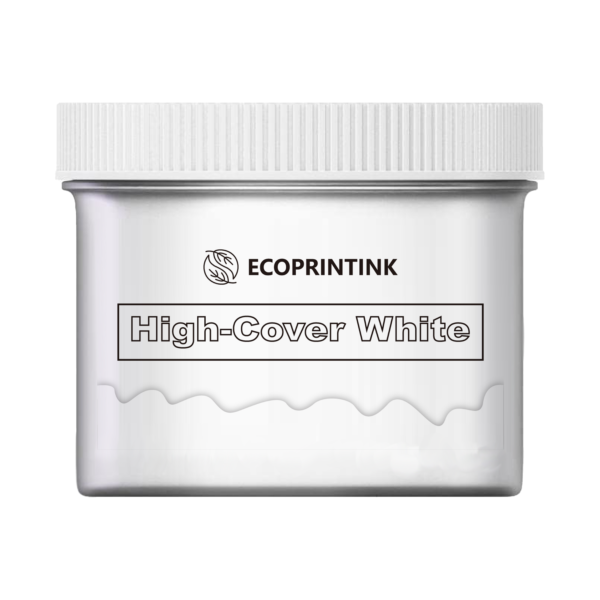
- Ignoring the base white: For vibrant colors on dark fabrics, always use a high-quality white plastisol ink as an underbase. This prevents the garment color from dulling the 3D effect.
- Neglecting Eco-Standards: Many global retailers now demand pvc-free plastisol ink. Ensure your 3D additives are compatible with non-PVC bases to avoid compliance issues.
Summary Checklist for Buyers
| Need | Recommended Ink |
| Sharp Branding/Logo | High Density (HD) |
| Soft, Comfortable Feel | Puff Ink |
| Low Production Cost | Puff Ink |
| Maximum Durability | High Density (HD) |
| Fast Turnaround | Puff Ink |
FAQ for Large-Scale Garment Manufacturers
Q1. How do we prevent HD ink from cracking during the shipping process?
Cracking is almost always an under-cure issue. Ensure your dryer is long enough to bake the entire thickness of the ink. Adding a small percentage of “elongation additive” or using a high-quality specialty ink manufacturer’s HD base can also improve flexibility.
Q2. Is there a significant price difference in bulk orders?
Yes. While the price per kilo might be similar, the yield is different. Puff ink goes much further because it expands. HD ink is a “heavy” print, meaning you will order significantly more volume for the same number of shirts.
Q3. Can we achieve a 3D effect on waterproof nylon?
Standard plastisol won’t stick. You must use a bonding agent or a specific nylon catalyst. Even then, HD is difficult on nylon due to the flexibility required. Puff is generally not recommended for waterproofed surfaces as the expansion can break the bond with the fabric.
Q4. How does “non-PVC” status affect 3D printing?
Modern pvc-free plastisol ink performs nearly identically to traditional ink. However, the “flash” time might be slightly different. We recommend testing the “tack-free” state of the underbase before applying the 3D layer.
Q5. Can we mix glitter or glow-in-the-dark powders with these inks?
You can mix them with puff for a unique textured look, but they are most effective in HD ink. Because HD ink is clear and sits on the surface, the light-reflective particles (like glow or glitter) remain visible and trapped in a thick, protective layer.
About ECOPRINTINK
As a leading Plastisol Ink Manufacturer, ECOPRINTINK focuses on high-performance, specialty ink manufacturer solutions that meet the rigorous demands of modern garment factories. Whether you need the soft rise of puff or the architectural precision of high density, we provide the technical support and wholesale plastisol ink supply to keep your production lines moving efficiently.

 EN
EN  PT
PT  ES
ES  DE
DE  FR
FR  IT
IT  JA
JA  PL
PL