
Table of Contents
If you want the short answer here it is: The right ink makes your machines run faster and it stops you from wasting money on ruined shirts. Most shop owners look at the price of a gallon of ink. I think that is a huge mistake. You should look at how many good shirts you finish every hour. Using a high-quality white plastisol ink can cut your labor costs and it can lower energy bills by 20% because it clears the screen faster and it dries quicker.
I have spent years helping big print shops fix their production lines. I have seen shops lose thousands of dollars just to save fifty cents on a bucket of ink. In this guide I will show you why the “total cost of printing” is the only number that matters for your business.
What Does Production Efficiency Mean in Screen Printing?
In our world efficiency is not just about speed. It is about how many “accepted garments” come off the dryer every hour. If you print 500 shirts but you have to throw away 50 because the ink smeared or it didn’t cover the fabric then you are not being efficient.
You need to track these Key Performance Indicators (KPIs):
- Prints per hour (PPH): How fast the machine moves.
- First-pass yield: The percentage of shirts that are perfect the first time.
- Reject rate: How many shirts go in the trash.
- Downtime: How much time the machine is sitting still while people clean screens or they fix ink.
Industry benchmarks show that labor generally accounts for 50% to 70% of a screen-printed shirt’s cost. If an ink is tricky to handle, production slows down and labor costs rise fast.
How Plastisol Ink Affects Overall Printing Efficiency
Ink is the fuel for your press. If you put bad fuel in a race car then it won’t win. Good screen printing ink for fabric should be easy to push through the mesh. If the ink is too thick then your workers get tired or your automatic machine has to slow down to prevent blurry prints.
At ECOPRINTINK we design our ink to have a creamy feel. This means the ink moves easily when the squeegee hits it but it stays still when it is on the shirt. This balance is what keeps your production line moving without stops.
Ink Opacity: Reducing Print Strokes and Production Time
Have you ever had to print and flash and then print again just to get a bright white on a black shirt? That second print stroke is a profit killer. It doubles the time it takes to make one shirt.
When you use a high-opacity white plastisol ink you can often get the look you want in just one hit.
- Practice Tip: Use a lower mesh count (like 110 or 125) with high-opacity ink to get more ink on the fabric in one pass. This saves you 3 to 5 seconds per shirt. Over 1,000 shirts that is over an hour of saved time.

Flash Performance: Reducing Waiting Time Between Colors
The flash dryer is usually the biggest bottleneck in a shop. If your ink takes 10 seconds to skin over so you can print the next color then your whole press has to wait 10 seconds.
Better ink formulas use special resins that react faster to heat. If you can drop your flash time from 10 seconds to 6 seconds then your production speed jumps up.
Cure Temperature: Reducing Energy Use and Increasing Dryer Throughput
Most plastisol inks need to reach 320°F (160°C) to fully cure. This takes a lot of electricity. However many big brands now ask for pvc-free plastisol ink that can cure at lower temperatures like 280°F (138°C).
The benefits of lower cure temps:
- Lower Energy Bills: Your dryer doesn’t have to work as hard.
- No Scorched Fabric: You won’t burn expensive polyester shirts.
- Faster Belt Speed: You can run the dryer belt faster because the ink reaches its cure point sooner.
Viscosity Stability: Maintaining High-Speed Printing Performance
I have seen cheap inks that start out thin but they get thick and chalky after an hour of printing. This is a nightmare for consistency. When the ink changes your prints change. Your workers have to stop the machine to add reducers or they have to stir the ink.
Good specialty screen printing ink stays the same from the first shirt to the last shirt. This stability means you don’t have to adjust your squeegee pressure every 30 minutes.
Wet-on-Wet Performance: Reducing Unnecessary Flashing
If you want to go really fast then you need to print wet-on-wet. This means you don’t flash between colors. To do this your ink must not be tacky. If the ink is sticky then the second color will pick up the first color from the shirt.
Using a low-tack pvc-free plastisol ink allows you to print 4 or 5 colors without a single flash. This can triple your PPH on multi-color jobs.
Ink Consistency: Reducing Press Adjustments and Downtime
Every time a press stops you lose money. If your ink has clumps or bits in it then it will clog your screen. Then you have to stop and wipe the screen and maybe even restart the job.
We make sure ECOPRINTINK products are triple-milled. This makes the ink perfectly smooth. You won’t find lumps in our metallic gold screen printing ink and that is a common problem with cheaper brands.
Batch Consistency: Preventing Color Variation and Rework
Imagine printing 5,000 shirts for a big brand and then you realize the last 1,000 shirts are a slightly different shade of red. This often comes down to batch-to-batch consistency—which is why partnering with a reliable plastisol ink manufacturer with strict quality control is essential.
Reworking or replacing 1,000 shirts is enough to kill your profit for the whole month. Always check that your supplier uses computer-controlled color matching.
Low-Bleed Performance: Reducing Polyester Printing Defects
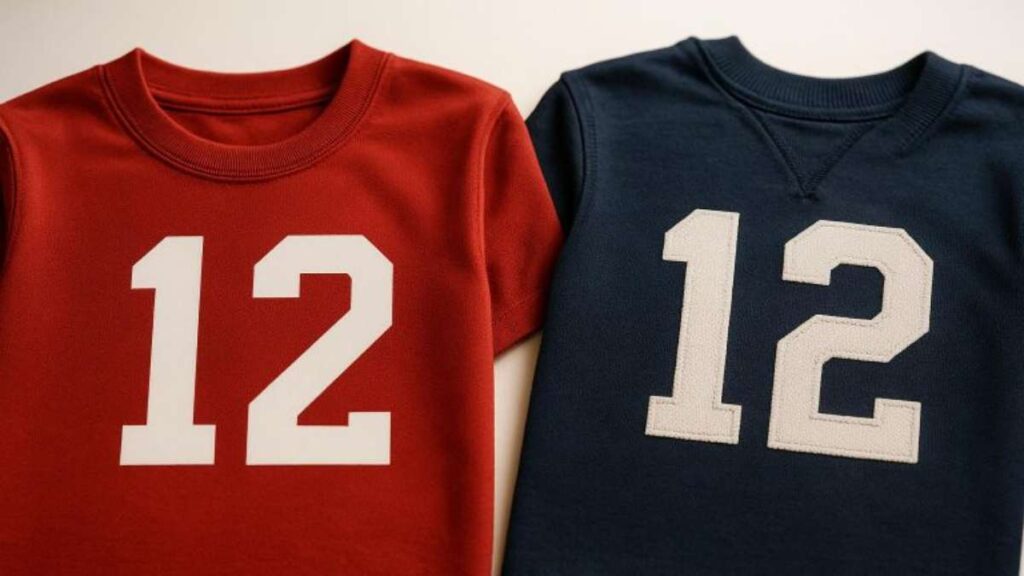
If you print white on a red polyester shirt sometimes the red dye bleeds into the white ink and it turns pink. This is called dye migration.
Using a low-bleed ink is the only way to solve this. It stops the gas from the fabric dye from moving into the ink. It might cost more per gallon but it saves you from having a 10% reject rate on sports jerseys.
Ink Transfer Efficiency: Reducing Ink Consumption
Better ink clears the screen mesh more completely. This means more ink goes on the shirt and less stays in the screen. We call this transfer efficiency. If your ink clears well then you use less ink to get the same brightness. You might find that a more expensive ink actually lets you print 10% more shirts per gallon.
How Better Ink Reduces Cleaning and Changeover Time
At the end of the shift your team has to clean the screens. Thick and sticky ink is hard to wash off. Smooth and well-formulated ink wipes away easily. If you save 10 minutes on every screen cleaning and you clean 20 screens a day then you just saved 3 hours of labor time.
Ink Price vs Total Production Cost: The Real Math
This is the most important part of being a plastisol ink manufacturer expert. Let’s compare two types of ink for a big job of 10,000 shirts.
| Cost Factor | Ink A (Cheap Ink) | Ink B (Premium ECOPRINTINK) |
| Ink Price per kg | $5.20 | $5.80 |
| Print Strokes | 2 strokes (slow) | 1 stroke (fast) |
| Flash Time | 10 seconds | 6 seconds |
| Reject Rate | 4% (400 shirts) | 1% (100 shirts) |
| Cleaning Stops | 5 times per shift | 0 times per shift |
| Final Result | Higher Total Cost | Lower Total Cost |
As you can see Ink B costs 60 cents more per kg. But Ink B is much cheaper because it saves on labor and electricity and ruined shirts. Big clients care about the Cost per Accepted Garment and they do not care about the price on the ink bucket.
How to Calculate the Cost per 1,000 Printed Garments
To find your real cost you should use this simple formula:
(Ink Cost + Labor Cost + Energy Cost + Cost of Rejected Shirts) / (Total Finished Shirts / 1000)
If you do this math then you will see that cheap ink is actually a luxury you cannot afford.
How to Evaluate Plastisol Ink Through a Production Trial
Don’t just take my word for it. Run a Production Trial in your shop.
- The Setup: Take two identical jobs.
- The Test: Use your old ink on Job 1 and ECOPRINTINK on Job 2.
- The Timer: Use a stopwatch. Measure how many shirts come off the dryer in one hour for each job.
- The Count: Count how many shirts have mistakes.
- The Cleanup: Time how long it takes to wash the screens.
This data will tell you the truth about your efficiency.
Plastisol Ink Production Efficiency Checklist
- Is your ink creamy and easy to stir?
- Does your white ink cover in one hit?
- Can you flash your ink in under 7 seconds?
- Is your dryer belt moving at maximum speed?
- Are your screens staying clean during the run?
- Is your reject rate below 1.5%?
If you checked “No” to any of these then you are losing money every time the press spins.
FAQ: What Big Printing Factories Really Care About
1. Is your ink safe for global shipping and eco-standards?
Yes. Many big retailers now require ZDHC and OEKO-TEX compliance. Our pvc-free plastisol ink meets these strict rules and it helps you get big orders from international brands. You can check the safety standards at OEKO-TEX.
2. How do I handle large orders on 100% polyester?
You must use a low-bleed system. Our ink prevents dye migration so you do not have to worry about color changes after the shirts leave your factory. This keeps your reject rate very low.
3. Can I use your ink for high-end fashion brands?
Absolutely. Fashion brands want a soft hand feel. Our specialty screen printing ink is designed to be soft and flexible even with high-density or puff effects.
4. Does eco-friendly ink cost more to run?
No. While the price per gallon might be higher the total cost of printing is lower because you have fewer rejects and you can print faster at lower temperatures. It saves you money on energy and labor.
5. How do you ensure the color is the same every time?
We use digital color matching. If you order a specific blue today and then you order it again in six months it will be the exact same blue. This prevents rework costs that happen with manual mixing.
 EN
EN  PT
PT  ES
ES  DE
DE  FR
FR  IT
IT  JA
JA  PL
PL