
Tabla de contenido
Si quieres evitar que las impresiones se agrieten y los colores se corran, la respuesta es simple: necesitas controlar la temperatura de curado y usar materiales de alta calidad. serigrafía tinta plastisolHemos comprobado que la mayoría de los problemas con la tinta plastisol en el Reino Unido se deben a que las imprentas están demasiado frías o a que las secadoras no están calibradas. Al solucionar estos dos problemas, reducirá el desperdicio en un 20%, acelerará la producción y mantendrá a sus clientes satisfechos.
6. En ECOPRINTINKLlevamos años trabajando en el taller. Sabemos que el clima británico es una pesadilla para la tinta. Cuando el cielo está húmedo y gris, la tinta se comporta de forma diferente. Hemos escrito esta guía para ayudarte a dominar la resolución de problemas en la serigrafía, para que dediques menos tiempo a limpiar pantallas y más tiempo a generar ingresos.
¿Por qué las imprentas del Reino Unido tienen problemas con la tinta plastisol?
El Reino Unido tiene un clima único. No se trata solo de la lluvia; también influyen la humedad y las fluctuaciones de temperatura en los almacenes antiguos. Observamos repetidamente los mismos defectos en la tinta plastisol. La mayoría se deben a cómo reacciona la tinta al ambiente antes incluso de aplicarla sobre la prenda.
El problema del “frío matutino”
En Manchester o Londres, una imprenta puede estar a 5 °C a las 8:00 de la mañana. La tinta tradicional se endurece. Si intentas imprimir con tinta fría, no pasará a través de la malla. Podrías pensar que la tinta está en mal estado, pero simplemente está fría.
Best Practice: Nunca inicies una tirada grande con tinta fría. Recomendamos mantener los recipientes de tinta alejados del suelo. Colócalos en una estantería donde haga más calor. Remueve bien la tinta durante 3-5 minutos. Esto la suaviza, dejándola cremosa y lista para fluir a través de una malla de alta densidad.
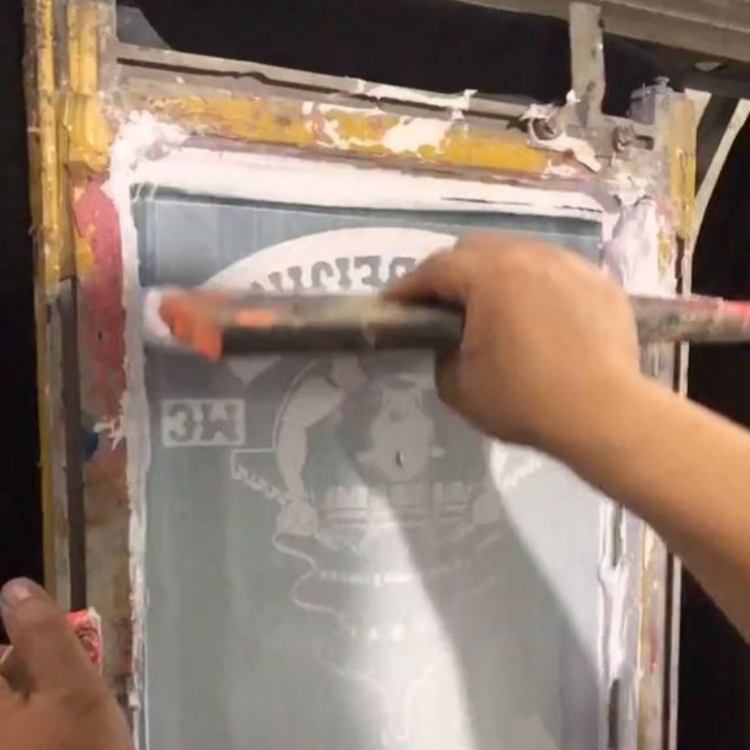
Problema 1: Curado insuficiente y el infame fallo en la prueba de lavado.
Nada perjudica más a un negocio que un cliente que llama para decir que el diseño se borró al lavarlo. Este es el peor de los problemas con la tinta plastisol.
El plastisol es una tinta a base de plástico. No se seca al aire, sino que se cura con calor. Si la película de tinta no alcanza los 160 °C (320 °F), las moléculas no se adhieren. En el Reino Unido, es común observar un curado superficial: la superficie parece seca, pero la parte inferior aún está húmeda.
Tabla de referencia de curado
| Tipo de tinta | Temporal requerido | Tiempo de Secado | Consejo sobre la velocidad de la correa |
| Tinta plastisol estándar | 160°C | 3-5 segundos | Lento y constante |
| tinta plastisol sin PVC | 145°C – 160°C | 2-4 segundos | Mejor para equipos sensibles al calor |
| Blanco de baja decoloración | 150°C | 3 segundos | Destello rápido para evitar la migración del tinte. |
“Un error común es fiarse del indicador de temperatura de una secadora antigua. Hemos visto indicadores que marcan 180 °C cuando la temperatura real de la cinta era de solo 140 °C.” Información técnica del laboratorio ECOPRINTINK.
Problema 2: Migración de tinte (El dolor de cabeza del "rosa blanco")
¿Alguna vez te ha pasado que una camiseta roja de fútbol con un estampado blanco nítido se vuelve rosa al día siguiente? Eso es migración de tinte. Es un verdadero fastidio. Básicamente, el calor de la secadora convierte el tinte de la tela de poliéster en gas, y ese gas queda atrapado dentro de la película de tinta.
Cómo resolver esto:
- Baja el fuego: Utilice tintas diseñadas para curarse a temperaturas más bajas.
- Utilice un bloqueador: Utilice una base gris específicamente diseñada para poliéster.
- No apilar en caliente: Sacar las camisas calientes de la secadora y apilarlas atrapa el calor y mantiene el proceso de evaporación. Extiéndalas para que se enfríen.
Nosotros proporcionamos soluciones de tinta plastisol para serigrafía Para estos problemas específicos, nuestras tintas antimigración actúan como un escudo contra los tintes de poliéster difíciles de aplicar.
Número 3: Fibrilación (La impresión “borrosa”)
¿Te ha pasado que tu estampado se ve genial en la máquina, pero después de un lavado se ve con aspecto descolorido o con pelusa? Eso es fibrilación. Lo que ocurre es que las fibras de algodón sobresalen de la tinta. Este es un problema común en la serigrafía en el Reino Unido, ya que muchos talleres utilizan prendas más económicas y con mayor contenido de fibras.
La solución: Necesitas una mejor capa de acabado o una base más espesa. Usar una tinta especial de alta calidad garantiza que tu tinta blanca tenga la consistencia suficiente para fijar las fibras.
En realidad, la mejor manera de solucionar esto es aplicar calor a la impresión con una plancha o prensa de calor durante unos 2 segundos después de que se haya secado. Esto aplana las fibras y proporciona un acabado liso y listo para la venta.
Cómo solucionar los defectos de la tinta plastisol: una lista de verificación
Cuando las cosas salgan mal, no te preocupes. Usamos esta misma lista de verificación cada vez que ayudamos a un cliente a solucionar un problema de producción.
- Compruebe la tensión: ¿Están sueltas las pantallas? Las pantallas sueltas provocan bordes borrosos y acumulación excesiva de tinta.
- Revisa la escobilla limpiacristales: ¿El borde está afilado? Si la espátula está redondeada, dejará pasar demasiada tinta, lo que suele provocar un efecto fantasma.
- Compruebe el número de mallas: Si utilizas tintas con purpurina o metalizadas de un fabricante de tintas especiales, asegúrate de que la malla sea lo suficientemente abierta (normalmente entre 32T y 43T) para que las partículas no obstruyan la pantalla.
Caso práctico real: La aceleración de la producción en Leeds
Una tienda en Leeds estaba teniendo problemas con sus unidades de flash. Tuvieron que esperar 10 segundos a que se secara la base blanca antes de poder aplicar el siguiente color. Esto estaba acabando con sus ganancias.
Les hicimos cambiar a nuestra tinta plastisol blanca porque tiene una alta concentración de pigmento. Como la tinta era más opaca, pudieron usar una malla de mayor densidad y menos tinta. El tiempo de espera se redujo de 10 segundos a solo 4 segundos, y prácticamente duplicaron su producción horaria de la noche a la mañana.
Cómo empezar a mejorar tu calidad hoy mismo
No siempre es necesario comprar una secadora nueva para solucionar la mayoría de los problemas con la tinta plastisol. Empiece por lo básico: consiga un termómetro para saber con exactitud a qué temperatura funciona su secadora.
- Organiza tu tinta: Mantén tu tinta plastisol en una zona con temperatura controlada.
- Mejora tu blanco: La tinta blanca es la base de casi cualquier trabajo. Si el blanco es malo, toda la camisa estará mal.
Creemos que una mejor tinta se traduce en mejores resultados para su negocio. En ECOPRINTINK, nuestra misión es brindarle las herramientas que le faciliten la vida.
Preguntas frecuentes: Preguntas comunes de imprentas del Reino Unido
P1. ¿Por qué mi tinta plastisol sigue pegajosa después de pasarla por la secadora?
Esto suele significar que o bien el proceso de curado es excesivo o la velocidad de la cinta transportadora es demasiado alta. Si la tinta se calienta demasiado, se vuelve pegajosa. Si la velocidad es demasiado alta, no llega a curarse por completo. Comprueba la temperatura con un termómetro láser para asegurarte.
Q2. ¿Puedo diluir la tinta plastisol sin que pierda color?
Sí, pero no utilice más de 51 TP3T de diluyente. Si necesita una solución más fluida, le recomendamos mezclarla con un poco de base de tinta plastisol transparente para serigrafía en lugar de diluyente líquido.
Q3. ¿Su tinta cumple con la normativa REACH para el mercado del Reino Unido?
Por supuesto. Todas nuestras tintas plastisol sin PVC están diseñadas para superar todas las pruebas de seguridad internacionales más importantes, incluidas las que exigimos aquí en el Reino Unido y Europa.
P4. ¿Cómo puedo evitar que la tinta se seque en la pantalla?
¡Pregunta trampa! El plastisol no se seca en la pantalla porque no es a base de agua. Si la malla se obstruye, probablemente se deba a manchas o a la acumulación de residuos de tinta vieja. Asegúrate de limpiar bien las pantallas después de cada impresión.
P5. ¿Por qué mi tinta dorada se ve opaca?
Las tintas metálicas, como las doradas de fabricantes especializados, requieren una malla más fina para adherirse a la superficie de la tela. Si la presionas demasiado contra las fibras de la camisa, perderás todo el brillo. Aplica la tinta con suavidad.
 EN
EN  PT
PT  ES
ES  DE
DE  FR
FR  IT
IT  JA
JA  PL
PL