
If you want the short version: German buyers don’t just buy ink; they buy insurance against legal nightmares. Before they even talk about your price per kilo, they’re going to scrutinize your SDS (Safety Data Sheet) against the latest ECHA SVHC list, grill you on phthalate levels, and demand third-party proof like OEKO-TEX. If your paperwork has even one hole in it, your shipment is going to rot in a warehouse at the port of Hamburg.
By moving your production to a verified REACH plastisol ink, we help you skip the “high-risk” list and move straight to “preferred supplier” status. At ECOPRINTINK, we’ve spent a decade in the trenches of chemical compliance. Here is the reality of what it takes to win in the German market.
Tabla de contenido
The “German Standard”: It’s Not Just a Law, It’s a Culture
In Germany, the legal framework isn’t a suggestion. The Chemikalien-Verbotsverordnung (Chemicals Prohibition Ordinance) works alongside REACH to keep harmful substances off the shelves. When we talk to sourcing managers in Munich or Berlin, their biggest nightmare isn’t a late delivery—it’s a RAPEX notification (the EU’s “wall of shame” for dangerous products).
If a German brand gets caught with toxic ink on their shirts, the PR disaster is permanent. That’s why they obsess over safe screen printing ink.
Why Compliance Actually Helps Your Bottom Line
- Fast-Track Customs: Your goods move through German ports without being flagged for “random” chemical testing.
- Real Brand Trust: You stop being just another vendor and become a partner who “gets it.”
- Better Prints: To pass REACH, we have to use higher-grade resins. This means your phthalate-free plastisol ink will actually have better stretch and a softer feel than the cheap stuff.
1. The SDS: Your First (and Often Only) Impression
Before a buyer even looks at a print sample, they’ll ask for your SDS. They aren’t just skimming it—they are looking specifically at Section 3 (Ingredients) and Section 15 (Regulations).
The Insider Secret:
Most factories fail here because their SDS is a mess. It’s either 5 years old or uses “trade secret” labels instead of specific CAS numbers. German buyers want to see the numbers. If they spot a CAS number linked to a Substance of Very High Concern (SVHC) above 0.1%, the conversation ends right there.
Our Advice: Make sure your SDS follows the CLP Regulation (EC No 1272/2008). If it’s not in the GHS format used in Europe, it looks like you’re hiding something.
2. The Phthalate Reality Check
Phthalates are the “silent killer” of textile contracts. While some countries look the other way, Germany follows a “zero-tolerance” vibe. They don’t want “low-phthalate”—they want Phthalate-Free.
| Chemical Group | Threshold | Why It’s In Your Ink |
| DEHP, DBP, BBP | < 0.1% | Cheap plasticizers that make ink “creamy.” |
| DINP, DIDP, DNOP | < 0.1% | Often hidden in “unbranded” eco-inks. |
| Lead & Cadmium | < 100 ppm | Found in cheap, bright yellow or orange pigments. |
When we formulate our EU compliant plastisol ink, we swap these out for high-end, bio-compatible alternatives. You get the same performance without the legal risk.
3. The PVC Debate: Is it Banned? (The Truth)
Let’s settle the PVC noise. In Germany, there is a massive push toward “PVC-free” solutions, but here is the technical reality: PVC itself is not banned under REACH.
The catch? The plasticizers inside traditional PVC usually are.
Our Take on the Situation:
- The High-End Move: If your client is a boutique eco-label or a brand like Hugo Boss, don’t argue—just go PVC-free.
- The Mainstream Reality: For the vast majority of German brands, a high-quality, phthalate-free REACH plastisol ink is still the industry gold standard. It’s perfectly acceptable as long as your sustainable textile printing solutions are backed by a verifiable lab report.
Don’t let a “PVC-free” trend scare you off if your buyer is actually just looking for a clean, compliant plastisol.
4. Let’s Talk Reality: The 1-in-10 Failure Rate
We often hear manufacturers say, “I’ve never been caught, so my ink must be fine.” That is a dangerous game to play.
The European Chemicals Agency (ECHA) actually goes out and pulls products off the shelves and out of shipping containers to test them. In one of their major enforcement sweeps, the results were a wake-up call: nearly 10% of textile products failed. That means 1 in 10 shirts were loaded with restricted chemicals that shouldn’t have been there.
When you “get it wrong” in the German market, it’s not just a slap on the wrist. Here’s what actually happens:
- The Incinerator: German customs won’t politely send your goods back. They’ll seize the shipment and burn it. Then, they’ll send 15. diré the bill for the disposal.
- The Retail Lawsuits: German brands almost always have “Compliance Indemnity” in their contracts. If your ink causes a recall, they can (and will) sue you for every Euro of lost profit.
- The Blacklist: Once you’re flagged in the EU’s database as a high-risk supplier, your company name is effectively “poison” to other European sourcing agents.
5. Transitioning Your Factory: The Specialist’s Playbook
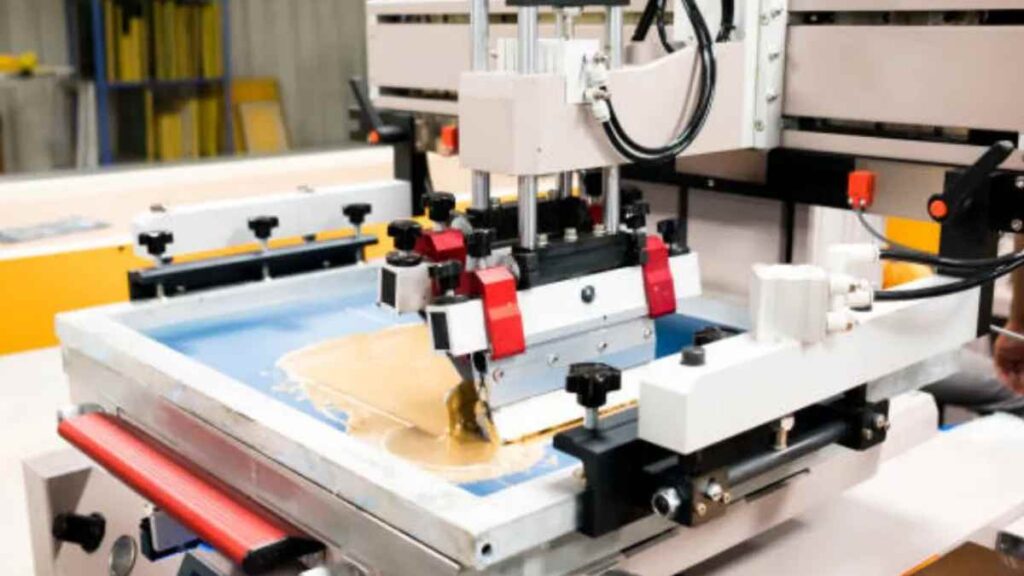
If you’re still using old-school ink, moving to a safe screen printing ink system isn’t just about buying new buckets. It’s about process.
Step 1: The Total Purge
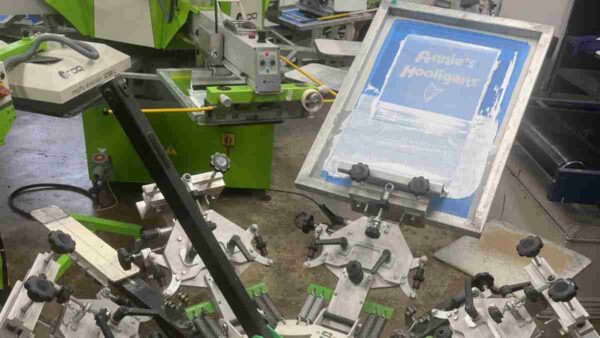
I’ve seen perfect ink fail a test because of 0.1% contamination. If you are switching to our screen printing ink for garments, you have to scrub your screens, squeegees, and mixing spatulas. Old residue is the enemy.
Step 2: Dial in the Curing
EU compliant plastisol ink behaves differently. You need to verify your curing profile (we usually recommend 160°C for 60-90 seconds). Don’t guess—use a “Donut” probe to make sure the ink reaches the temperature needed to lock in those safe polymers.
Step 3: Opacity Proofing
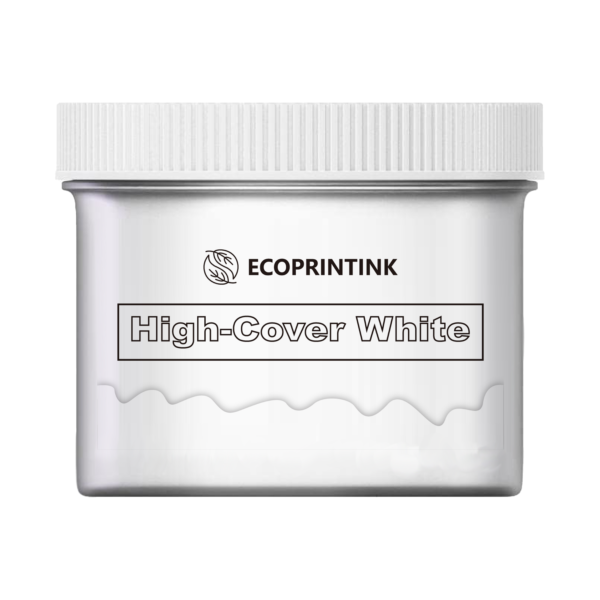
Don’t worry about your colors looking “thin.” Modern high opacity white plastisol ink is just as bright as the old toxic stuff. We’ve formulated it to stay thick and white on dark cotton while staying 100% REACH compliant.
Why ECOPRINTINK is the “Compliance Bridge”
We don’t just sell ink; we provide the paperwork you need to close the deal. With ECOPRINTINK, you get:
- Bulletproof SDS: Always updated to the 2024/2025 REACH SVHC lists.
- German-Market Readiness: We test our batches to make sure they pass the “LGL” (Bavarian State Office) standards.
- Transparency: No “hidden” chemicals. Just high-performance, compliant ink.
FAQ: What Our Clients Actually Ask Us
Q1. Is “lead-free” enough to get my goods into Germany?
Honestly? No. Being lead-free is just the “entry ticket” these days—it’s the bare minimum. German buyers are way more worried about the “hidden” stuff like phthalates (specifically DINP or DEHP) and azo amines. If your documentation only talks about lead, it’s a huge red flag for a German compliance officer. You need a full reach plastisol ink profile to even stay in the game.
Q2. How can I tell if my current ink will actually pass a German customs audit?
First, grab your SDS and flip to Section 15. If you don’t see “Regulation (EC) No 1907/2006” or “REACH” explicitly mentioned, you’re in trouble. But don’t just trust the paper—we always tell our clients to look for an OEKO-TEX ECO PASSPORT or a ZDHC Gateway listing. If your supplier can’t give you a verifiable ID number, the ink probably isn’t as safe screen printing ink as they claim.
Q3. Will switching to REACH-compliant ink kill my profit margins?
Look, the raw materials for eu compliant plastisol ink cost a bit more because we use premium, non-toxic plasticizers. You might see a 5-10% bump in ink costs, but when you break it down per shirt, we’re talking about fractions of a cent. Compare that to the cost of a German buyer rejecting a $50,000 shipment, and the “expensive” ink suddenly looks like a very cheap insurance policy.
Q4. Can I just mix my old ink with the new REACH-compliant stuff to save money?
Please, don’t do this. It’s the fastest way to fail a lab test. Even a tiny bit of “dirty” ink left in your screen or mixed into a bucket can contaminate the whole batch. If the lab detects even 0.11% of a restricted phthalate, the whole shipment is done. When you switch to our sustainable textile printing solutions, we always recommend a total “purge” of your squeegees and mixing tools first.
Q5. Do German buyers actually check these certificates, or is it just for show?
They definitely check. German sourcing agents are incredibly tech-savvy. They don’t just look at your PDF; they’ll scan the QR code on your Oeko-Tex certificate or look up your company on the ZDHC Gateway portal in real-time. If they find an expired or fake cert, you’ll be blacklisted faster than you can send a follow-up email. Transparency is the only way to win in this market.

 EN
EN  PT
PT  ES
ES  DE
DE  FR
FR  IT
IT  JA
JA  PL
PL